Hub Connectivity Drill Down
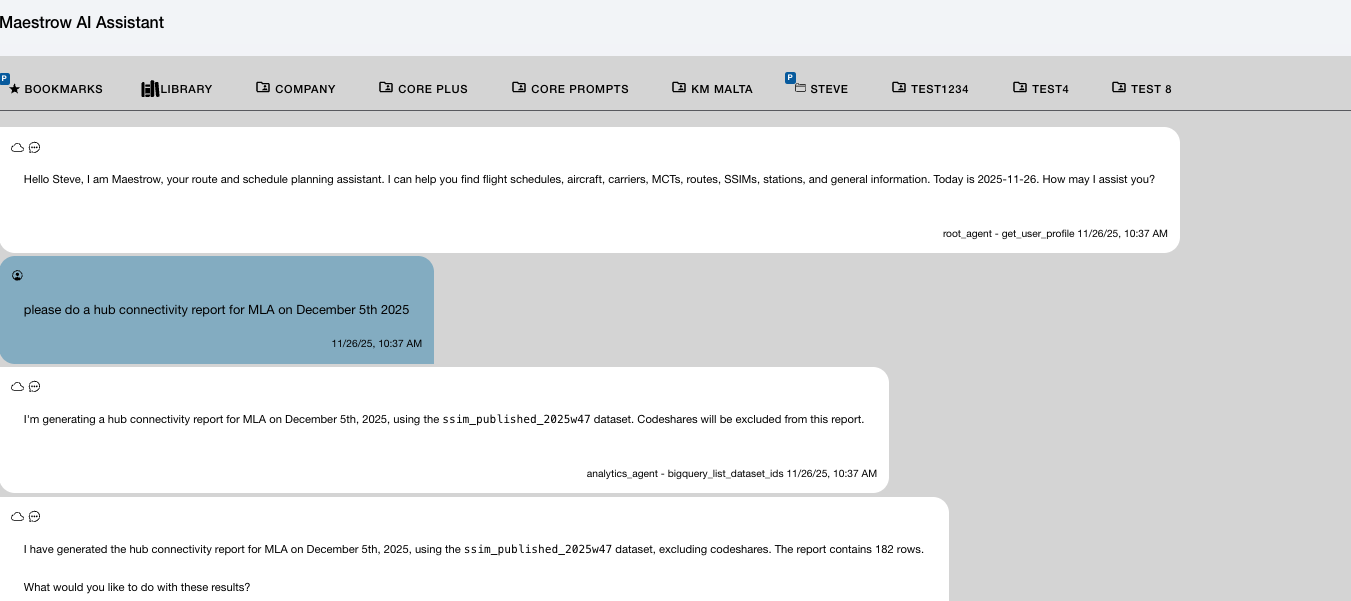
The Hub Connectivity Drill Down allows you to run what-if scenarios on individual flights within a hub connectivity report — for example, testing how a change in arrival time affects the number of gained or lost connections.
Example — MLA, 5 December 2025
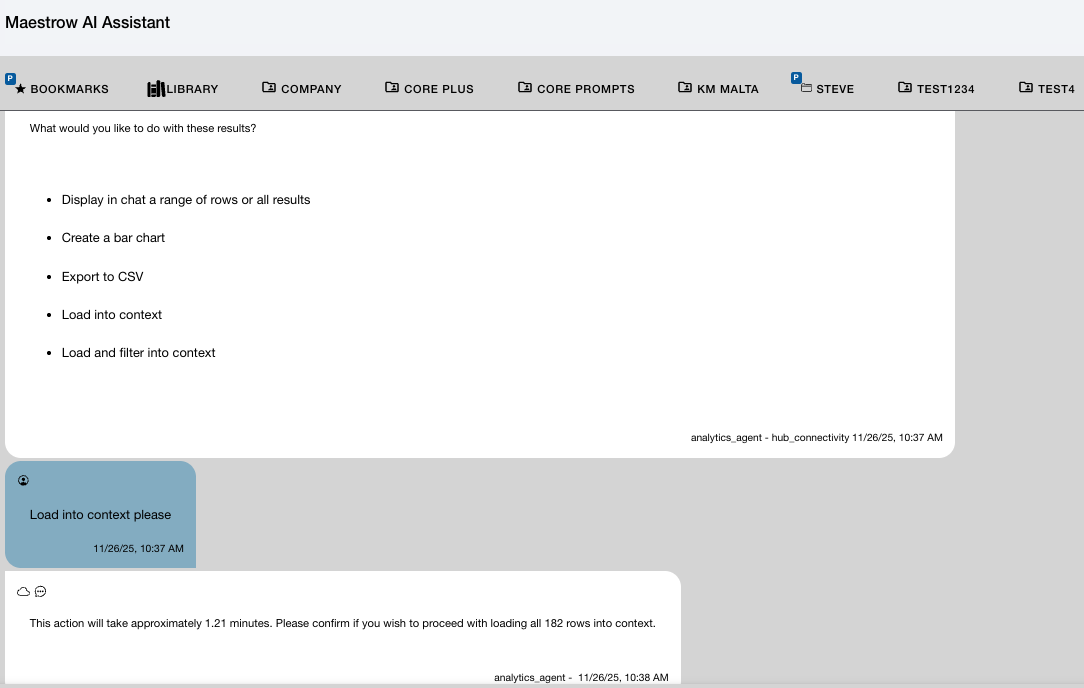
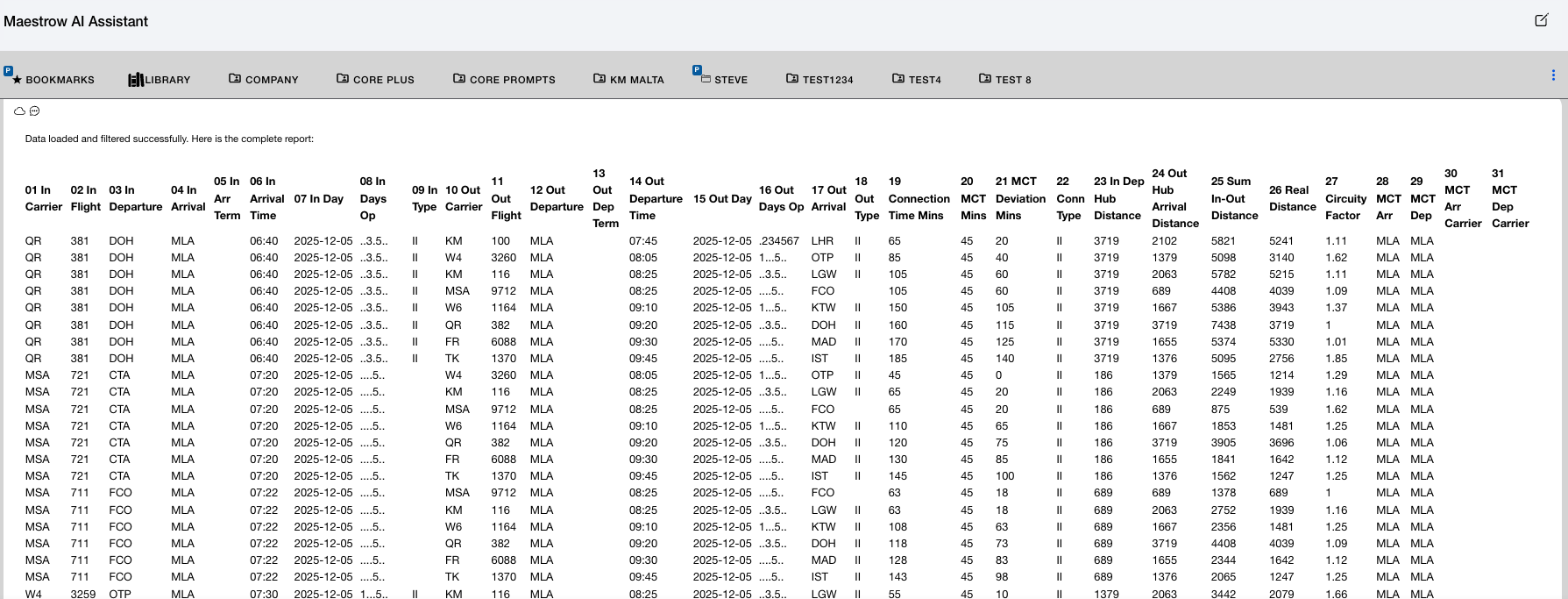
Using the ssim_published_2025w47 dataset (codeshares excluded), Maestrow generated a hub connectivity report for Malta (MLA) on 5 December 2025. The report contained 182 rows of two-leg itineraries, detailing inbound and outbound carrier, flight, connection times, MCT, MCT deviation, connection type, and distance and circuity metrics for all valid same-day connections over MLA.
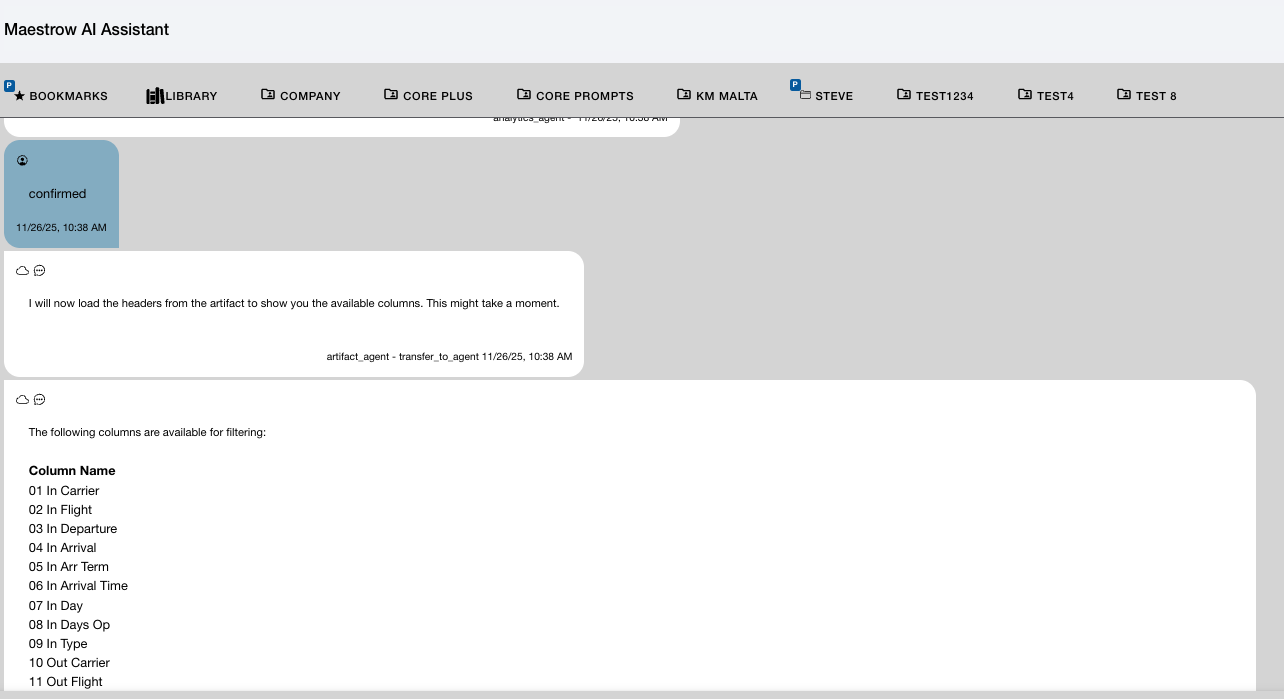
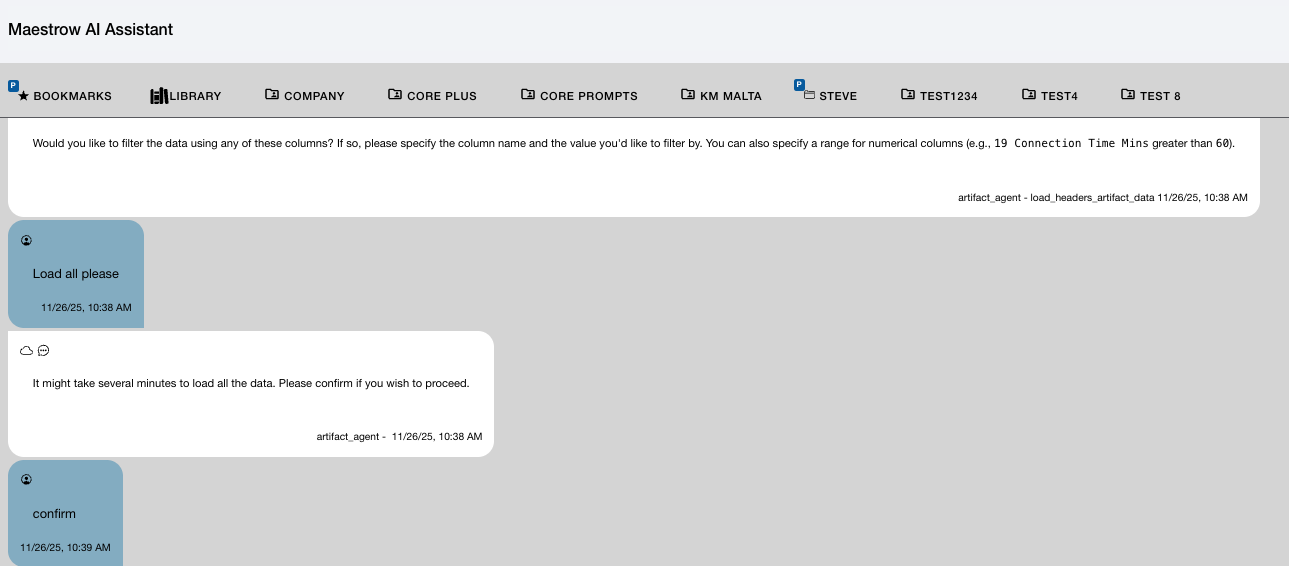
Key columns available for analysis:
- Inbound and outbound carrier, flight, and station data (columns 01–18)
- Connection time, MCT, and MCT deviation (columns 19–21)
- Connection type and distance attributes — inbound/outbound hub distances, summed distance, real distance, and circuity factor (columns 22–27)
- Station- and carrier-specific MCT attributes (columns 28–31)
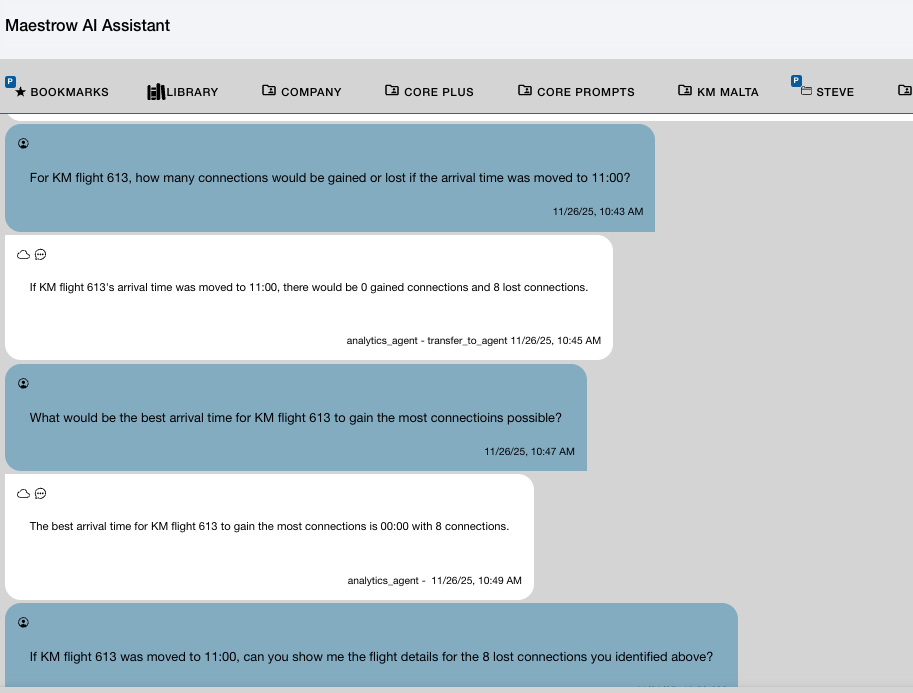
What-If Scenario — KM 613 (FCO–MLA)
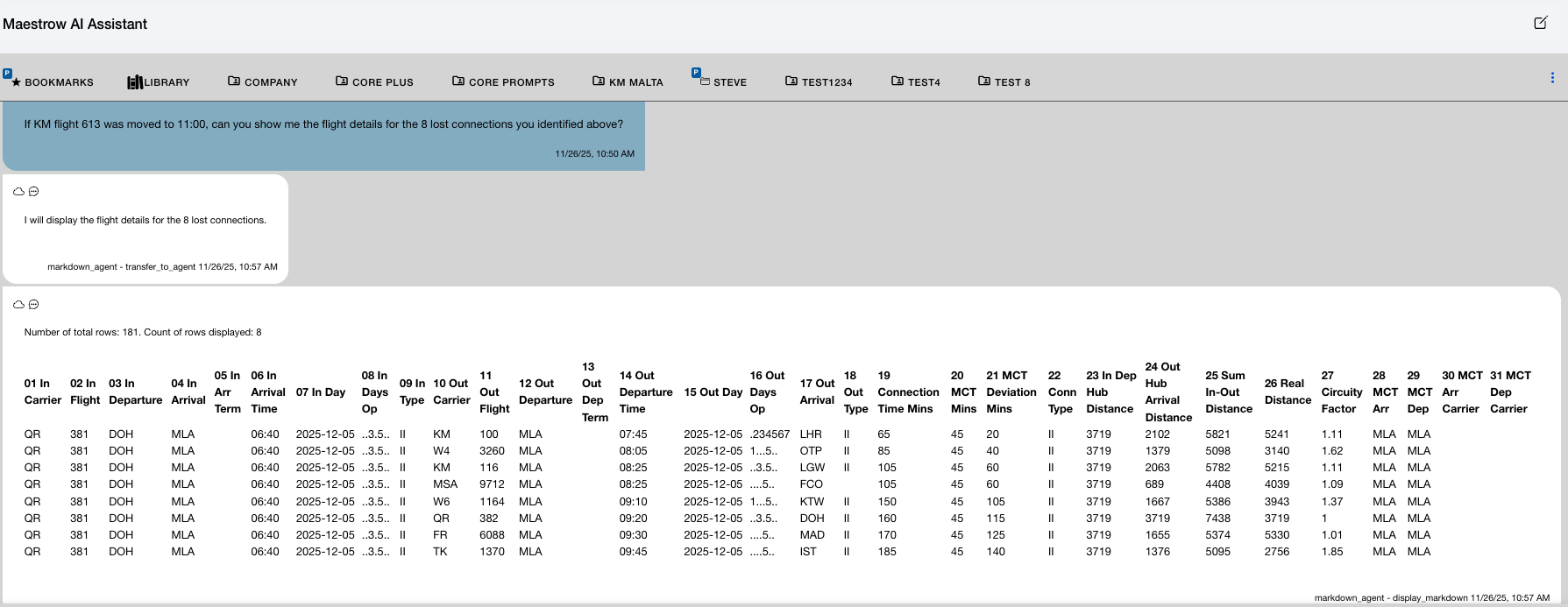
When testing an arrival time shift of KM 613 to 11:00, Maestrow reported 0 gained connections and 8 lost connections, indicating that this move would materially weaken MLA's connectivity for that flight.
When using the "optimal arrival time" feature, constrain the search to a practical operating window. An unconstrained search may return operationally unrealistic times.
Workflow Screenshots